Abstract
This work examined airfoil ice accretion behavior using NASA LEWICE together with OpenFOAM-based flow analysis and ParaView post-processing. The project connected prediction tools, geometry preparation, and visual interpretation to study how icing modifies airfoil performance and flow behavior.
Background
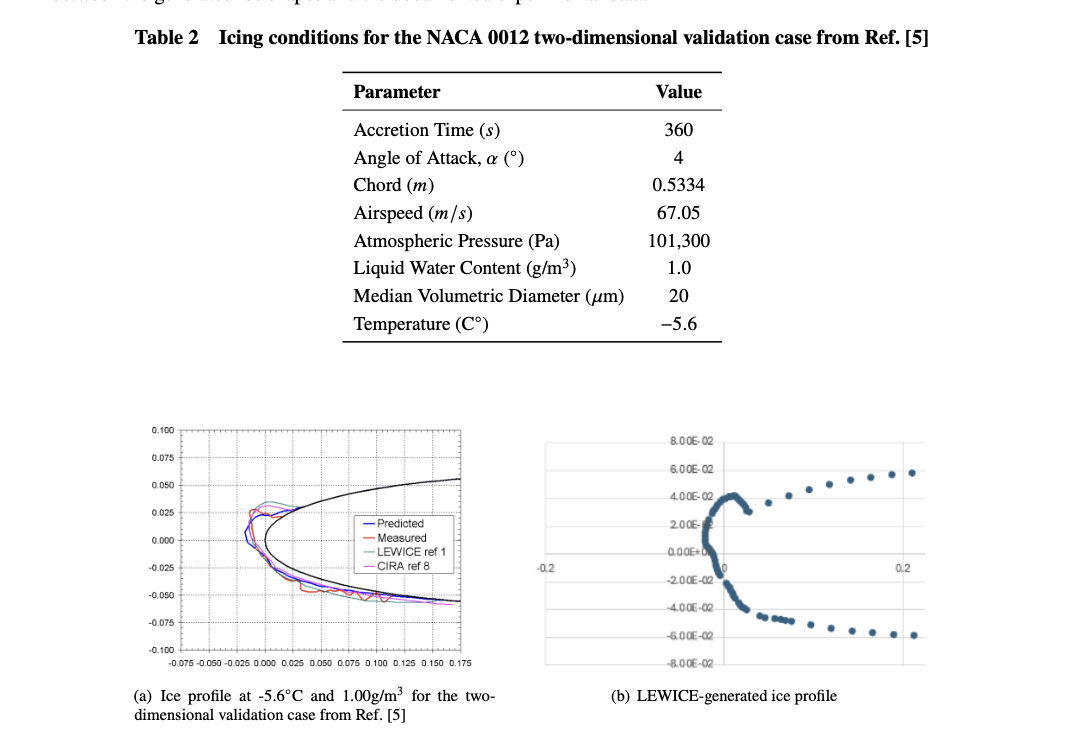
Ice accretion changes the effective airfoil shape, increases drag, and can degrade lift. Computational tools are valuable here, as we couldn't test the ice accretion itself on an actual NACA 0012 wing. The simulation conditions (as stated in our paper) that I personally used, are attached below.
Research Focus
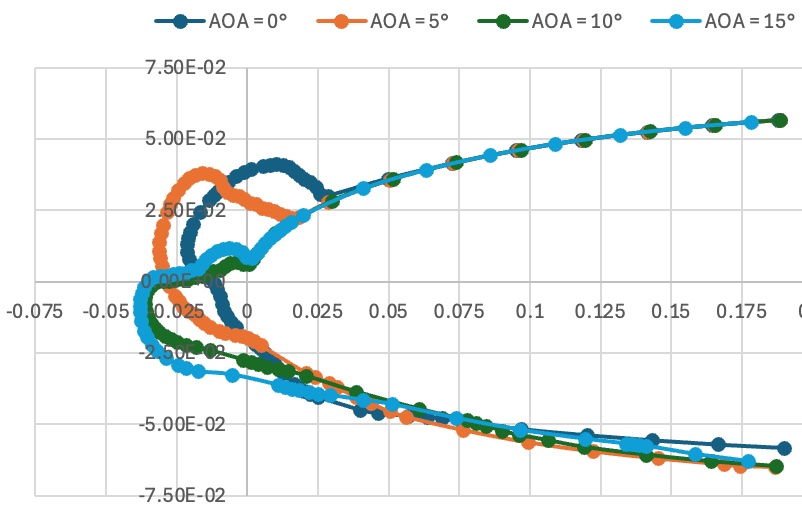
- LEWICE based 2D and 3D ice accretion prediction over 0, 5, 10, and 15 degrees
- Geometry transfer into CFD workflows
- Visualization of surface and flow changes after icing, mainly showing the airflow separation through Paraview
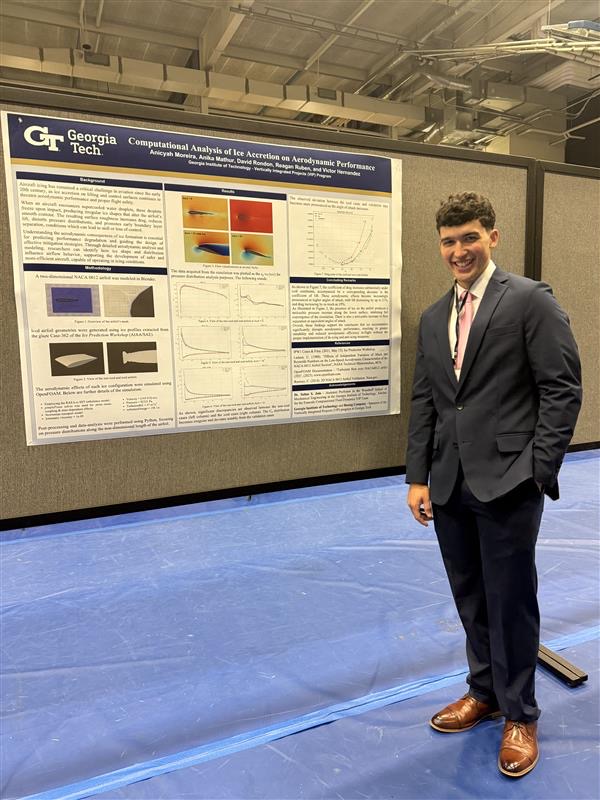
- Organizing results for publication and presentation at GURC (Fall 2025) and AIAA (Spring 2026)
Outcome
The project contributed to a conference paper. I am now a published author because of this research, we contributed to the 3D iced NACA 0012 data specifically, while we validated everything else through past research done.