Overview
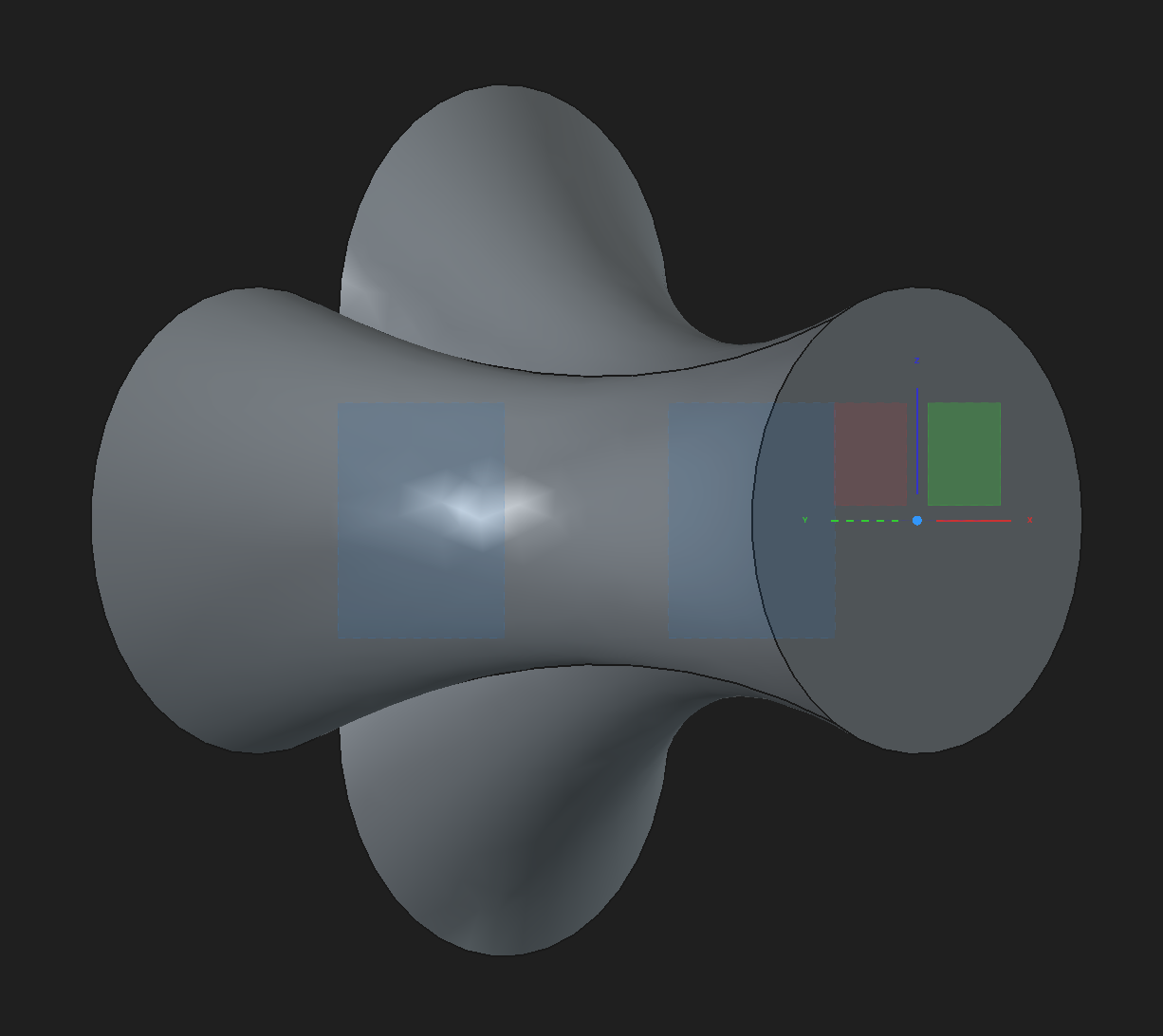
This project explores a three-leaf-clover rocket nozzle outlet geometry as an alternative to conventional axisymmetric exits. The objective is to study whether a nontraditional exit shape can meaningfully influence thrust, shock structure, or flow separation behavior across changing pressure ratios.
Workflow
- Modeled the geometry in FreeCAD
- Exported the solid model to STL for meshing and simulation
- Built a simulation-ready case in OpenFOAM
- Utilized rhoCentralFoam as the solver
- Ran cases through ParaView to inspect shocks, separation regions, and exit plume structure
What I am Investigating
The main questions behind the project were:
- How sensitive is thrust to outlet geometry at fixed chamber conditions?
- Does the clover-shaped exit promote earlier or later flow separation?
- How does the asymmetric outlet influence shock-cell structure and pressure recovery?
Modeling Focus
Rather than treating the nozzle purely as a CAD exercise, I am approaching it as a full propulsion analysis problem. That meant tracking not only geometry, but also solver setup, boundary-condition quality, and how to interpret the resulting flowfield in a way that is useful for design iteration.
Key metrics included:
- Exit velocity distribution
- Shock structure and asymmetry
- Wall pressure behavior
- Separation onset under different back-pressure conditions
Outcome
This is an active propulsion-design effort and serves as a foundation for deeper work on nontraditional nozzle geometries, including higher-fidelity validation, geometry variation studies, and future performance comparison against a baseline circular exit.
Future Plans
I plan to add a sort of “slide” mechanism to see if moving the flow around the side of the wall will speed it up or induce a higher drag force resulting in a lower thrust component.